.png)
Sustainability has become one of the defining topics in the office real estate sector over the past few years. As energy efficiency requirements and carbon reduction regulations continue to tighten worldwide, tenants and investors are placing increasing emphasis on ESG considerations and the environmental performance of buildings.
As a result, owners of existing office buildings are increasingly facing a critical question: is upgrading an existing asset sufficient, or could redevelopment offer a better long-term solution?
This is not merely a technical or sustainability-related consideration. The answer can have a significant impact on a building’s future competitiveness, market value and leasing potential.
According to the World Economic Forum, approximately 80% of the buildings that will still be in use in developed markets by 2050 have already been built today. Many of these assets were constructed before modern energy efficiency standards were introduced.
At the same time, several markets across Europe and North America have already implemented regulations that encourage—or require—the upgrading of existing building stock. The European Union’s energy performance directives, together with various national and city-level regulations, all point in the same direction: substantial investment in existing real estate assets will be necessary over the coming decade.
Regulatory pressure is not the only driver. Market demand is evolving as well. In pursuit of their own sustainability goals, occupiers are increasingly seeking energy-efficient, highly certified and future-ready office space. As a result, the gap in market perception between modern, sustainable buildings and outdated office stock continues to widen.
Owners generally have four strategic options available.
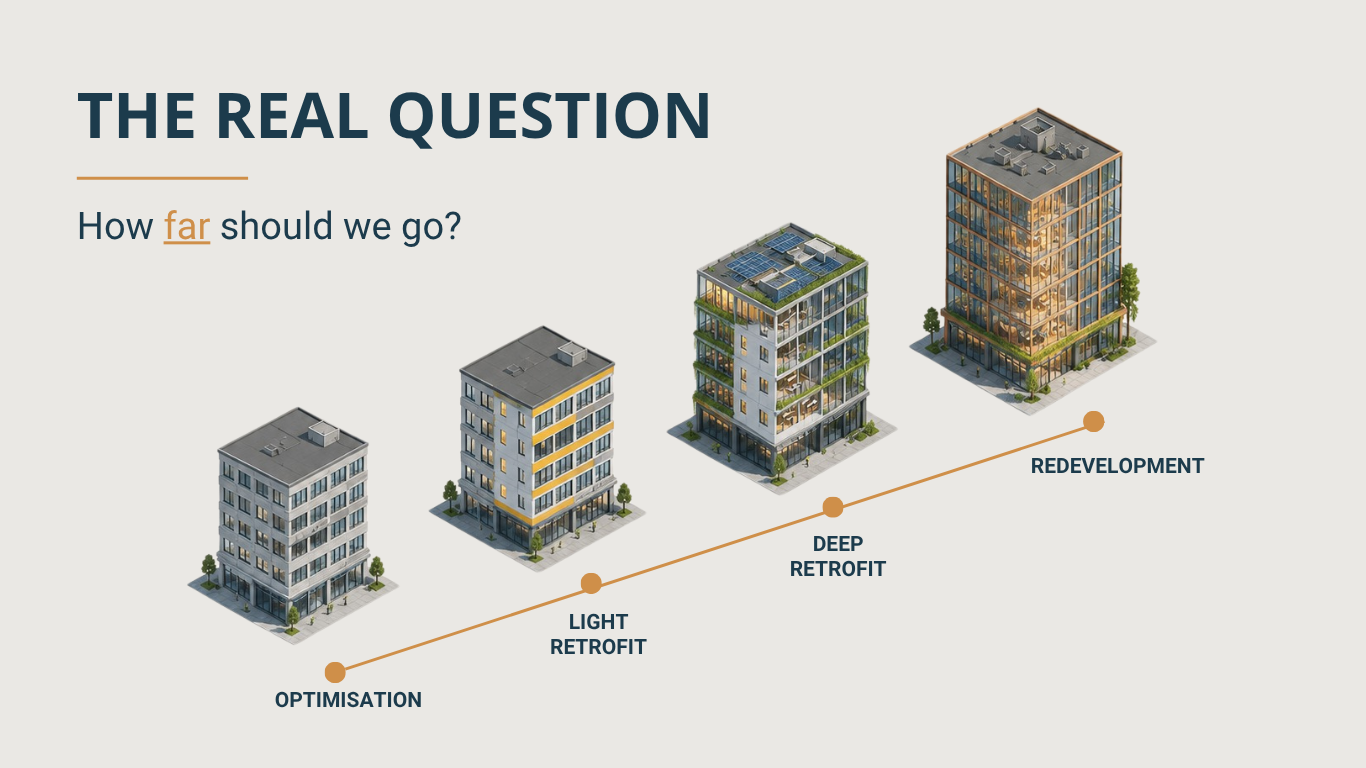
The simplest and least capital-intensive approach is building optimisation. This may include upgrading building management systems, improving lighting efficiency or implementing automation solutions. These measures can deliver quick wins but typically do not result in a dramatic improvement in overall building performance.
The next step involves moderate upgrades while maintaining the building’s existing structure. Such projects typically focus on improving energy efficiency, occupier comfort and operational performance without major structural interventions.
A deep retrofit involves comprehensive upgrades to a building’s core systems, façade or interior configuration. While these projects require significantly higher investment, they can substantially reduce energy consumption and carbon emissions while extending the building’s economic lifespan.
In certain cases, technical limitations or economic considerations make demolition and redevelopment the most viable long-term solution. New buildings can be designed according to the latest sustainability standards and occupier requirements, although redevelopment is typically the most complex and capital-intensive option.
Today, assessing a building’s sustainability performance requires more than simply evaluating the emissions generated during operation.
Increasing attention is being paid to embodied carbon - the environmental impact associated with the production, transportation and installation of construction materials.
For this reason, a well-designed retrofit can often represent a more sustainable solution than demolishing an existing asset and constructing a new building. However, not every building can be upgraded to meet future expectations.
Low floor-to-ceiling heights, inflexible floorplates and outdated structural designs can create limitations that ultimately make redevelopment the more practical long-term option.
In practice, there is rarely a universal solution.
For many assets, the most effective approach is a phased strategy: optimising operations in the short term, implementing targeted upgrades in the medium term and, when the timing is right, carrying out a major retrofit or even a complete redevelopment.
The decision requires balancing technical feasibility, financial returns, occupier expectations and the evolving regulatory landscape.
“Although regulatory pressure is currently less pronounced in Hungary than in many Western European markets, sustainability and energy efficiency expectations are becoming increasingly important here as well. Property owners should therefore begin assessing which assets within their portfolios may require significant upgrades or repositioning in the coming years. The buildings that remain competitive in the long term will be those that start preparing today.” - Dániel Pintér, Head of Property Management & Project Management
ESTON International
Drawing on the expertise of the Savills international network, ESTON International supports property owners in evaluating a wide range of upgrade and development opportunities. Whether the challenge involves technical assessments, operational optimisation, project management or investment analysis, establishing the right strategy today can create a significant competitive advantage for the decade ahead.
This article is based on the “Retrofit or Redevelopment?” analysis published in the Savills IMPACTS report. The full study can be found on page 45 of the Savills IMPACTS publication.
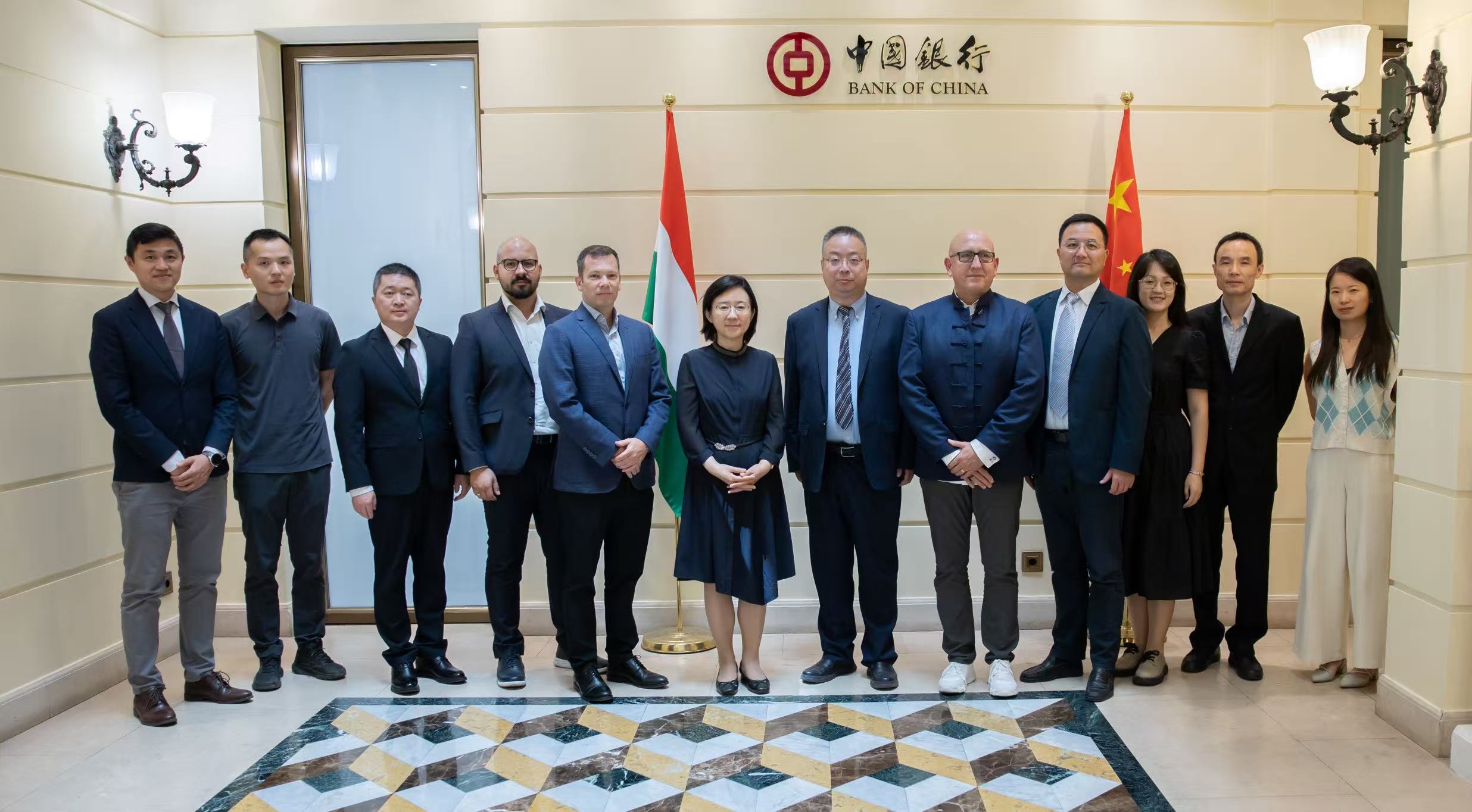
In recent months, ESTON Asia Desk has participated in a number of professional events and business forums that have further strengthened the company’s network within the Chinese business and investment community. These discussions have focused on investments targeting Hungary and the wider Central European region, as well as on supporting the European expansion of Chinese companies.


Get in-depth analysis and insights into the commercial real estate industry from our experts.

ESTON is proud to announce its latest achievement as theco-exclusive leasing agency for Krisztina Palace, one of the most iconicA-category office buildings on theBuda-side.
Get the latest updates and insights delivered straight to your inbox.

At our company, we understand the importance of staying up-to-date with the latest news and analysis in the commercial real estate market. Our team of experts continuously monitors market trends and provides valuable insights to help you make informed decisions. Whether you're a seasoned investor or new to the industry, our latest news and analysis will keep you informed and ahead of the competition.


